

What is an Electrocardiogram (EKG/ECG)?


An electrocardiogram, commonly known as an EKG or ECG, is a non-invasive medical test that records the electrical activity of your heart.1 An EKG or ECG is a simple yet powerful tool that can help your doctor detect a wide range of cardiac abnormalities, from irregular heart rhythms to evidence of a heart attack.2
Each time your heart beats, an electrical impulse travels through its chambers, causing the muscle to contract and pump blood throughout your body. An EKG captures these electrical signals and displays them as a series of waves on a moving strip of paper or a digital screen. By analyzing the pattern, size, and duration of these waves, a doctor can gain crucial insights into the heart's function and identify potential issues.1
How does an EKG work?

An EKG or ECG is characterized by a series of distinct waves, each corresponding to a specific electrical event in the heart.
- P Wave: This first small, upward wave represents the electrical impulse spreading through the atria, the two upper chambers of the heart, causing them to contract. Abnormalities in the P wave—such as an unusually tall, wide, or notched shape—may indicate issues like atrial enlargement or atrial conduction problems. 1,3,4
- QRS Complex: Think of this as the main event of your heartbeat. It's the large, sharp spike you see on an EKG. This spike shows the powerful squeeze of the two lower chambers of your heart, called the ventricles. This is the strongest part of the heartbeat because it's what pushes blood out to your lungs and the rest of your body. A wider or unusually shaped QRS complex may suggest a conduction delay or a ventricular abnormality.1,3,4
- T Wave: This smaller wave comes right after the big spike. It shows the lower chambers of your heart relaxing and recharging after their big squeeze. It’s like a reset button, getting the heart ready for the very next beat. Changes in the T wave’s shape or height can indicate problems such as electrolyte imbalances, ischemia, or other cardiac conditions.1,3,4
- ST Segment: This flat section between the end of the QRS complex and the start of the T wave represents the period when the ventricles are fully depolarized. Elevation or depression of the ST segment is clinically significant, often indicating conditions like heart attack (myocardial infarction) or ischemia.3
By analyzing the timing, shape, and sequence of these waves and segments, doctors can assess your heart rate, rhythm, and overall cardiovascular health.
Heart rate, pulse, and rhythm: What's the difference?
While often used interchangeably, heart rate, pulse, and rhythm refer to distinct aspects of your heart's function, all of which are measured by an EKG:
- Heart Rate: This is the number of times your heart beats per minute (bpm).6
- Pulse: This is the physical manifestation of your heart rate that you can feel at various points on your body, such as your wrist or neck.6
- Heart Rhythm: This refers to the pattern of your heartbeats. A normal rhythm is steady and consistent. An irregular rhythm, known as an arrhythmia, can be too slow (bradycardia), too fast (tachycardia), or in an inconsistent pattern.7
An EKG provides a visual representation of both the rate and the rhythm of the heart, allowing a physician to make a thorough assessment of its electrical health.
What Conditions Can an EKG/ ECG Help Diagnose?
An EKG is a powerful tool that helps medical professionals detect a variety of heart conditions by analyzing the heart’s electrical activity. Some of the most common conditions an EKG can help diagnose include:
- Irregular Heart Rhythms (Arrhythmias): EKGs are essential for identifying irregular heartbeats, including atrial fibrillation (AFib), bradycardia, tachycardia, and more.3
- Myocardial Infarction (Heart Attack): EKGs can detect changes in the heart’s electrical patterns caused by a heart attack, helping doctors act quickly to prevent further damage.3
- Ischemia (Poor Blood Flow): Reduced blood flow to the heart muscle can show up on an EKG as changes in the ST segment or T wave, signaling potential coronary artery disease.3
- Structural Changes (Enlarged Chambers): EKGs can reveal enlargement of the atria or ventricles, which may indicate long-standing high blood pressure, valve disease, or other heart conditions.3
- Electrolyte Imbalances and Medication Effects: Abnormal levels of potassium, calcium, or other electrolytes can alter EKG readings, as can certain medications that affect heart rhythm.3
- Conduction Abnormalities: Conditions like bundle branch blocks or heart block can be detected by observing delays or interruptions in the electrical signals across the heart.3
By highlighting these patterns, an EKG provides critical insights that guide diagnosis, monitoring, and treatment, making it one of the first steps in evaluating heart health.
When should you take an EKG?
Your doctor may recommend an EKG for various reasons, including the investigation of symptoms that could indicate a heart problem. These symptoms often include2:
- Chest pain
- Heart palpitations (a feeling of a racing, pounding, or fluttering heart)
- Shortness of breath
- Dizziness or fainting
- Rapid pulse
- Weakness or fatigue
EKGs are also used to monitor the health of individuals with known heart conditions, to assess the effectiveness of treatments like pacemakers or medications, and as part of a routine check-up to screen for potential heart disease, especially in individuals with risk factors such as high blood pressure, high cholesterol, smoking, diabetes, or a family history of heart disease.5
What are the types of EKG/ECG tests?
An EKG or ECG can be performed in several different ways depending on what your doctor needs to learn about your heart. Some tests are done while you’re resting, others capture how your heart responds to exercise, and some monitor your rhythm continuously over hours or days. Understanding the main types of EKGs can help you know what to expect and why your doctor may recommend one test over another.
Resting EKG/ECG (12-Lead)
The most comprehensive type of electrocardiogram is the 12-lead EKG, typically performed in a hospital or clinic setting. This test uses 10 to 12 small, sticky electrodes placed on the chest, arms, and legs. These electrodes capture the heart's electrical activity from 12 different angles, providing a detailed, three-dimensional view of the heart. This level of detail is essential for accurately diagnosing complex heart conditions.1,2
Stress or Exercise EKG
A stress or exercise EKG records your heart’s electrical activity while your heart rate and blood pressure increase through controlled physical activity—like walking on a treadmill or pedaling a stationary bike. Throughout the test, clinicians monitor your ECG tracings, symptoms, blood pressure, and how quickly your heart recovers afterward. The goal is to see how your heart performs when it’s working harder than it does at rest.
Ambulatory EKG (Holter or Wearable Monitor)
Because many arrhythmias are brief or unpredictable, doctors often prescribe extended monitoring tools (also called ambulatory monitoring devices) that record the heart’s rhythm over longer periods. This may include a Holter monitor, event recorder, or implantable loop recorder.
At-Home or Personal EKGs
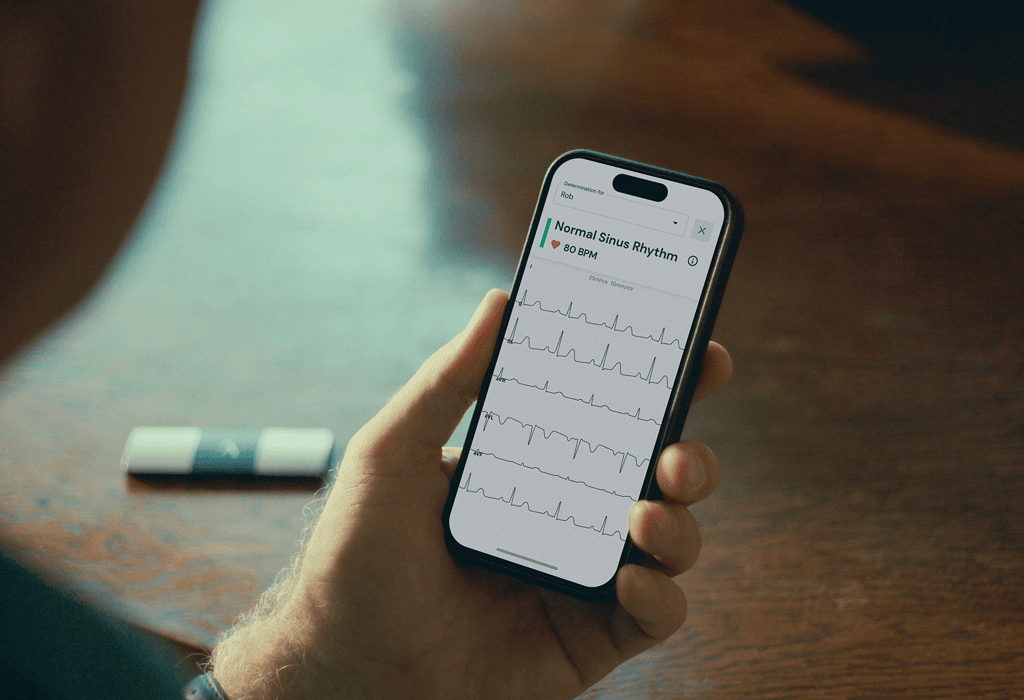
A convenient, over-the-counter, and often more affordable option, is a personal EKG. These portable, handheld devices make it possible to record an EKG from anywhere and at any time—like when you’re experiencing one of the symptoms mentioned earlier. Personal EKGs typically record fewer leads than an in-hospital EKG (usually a 1- or 6-lead), but are still highly effective at detecting rhythm abnormalities. Personal EKGs offer a convenient way to monitor your heart proactively and share important data with your doctor remotely.
An EKG is more than just a test, it’s a window into how your heart is working in real time. With options ranging from clinical to at-home monitoring, you have more ways than ever to stay informed and involved in your heart health. If you’re exploring tools that can support you between appointments, ask your doctor whether a personal EKG like Kardia could be a helpful part of your care plan.
Kardia personal EKGs do not check for heart attack and do not replace regular health checkups with your physician. Seek medical attention if you are experiencing any concerning symptoms or if you are having an emergency.
1. https://www.ncbi.nlm.nih.gov/books/NBK536878/
2. https://www.mayoclinic.org/tests-procedures/ekg/about/pac-20384983
3. https://www.ncbi.nlm.nih.gov/books/NBK549803/
4. https://my.clevelandclinic.org/health/diagnostics/16953-electrocardiogram-ekg
5. https://www.hopkinsmedicine.org/health/treatment-tests-and-therapies/electrocardiogram
6. https://my.clevelandclinic.org/health/diagnostics/heart-rate
7. https://www.mayoclinic.org/diseases-conditions/heart-arrhythmia/symptoms-causes/syc-20350668